How to Use QR Codes in Advertising (5 Placements That Actually Work)
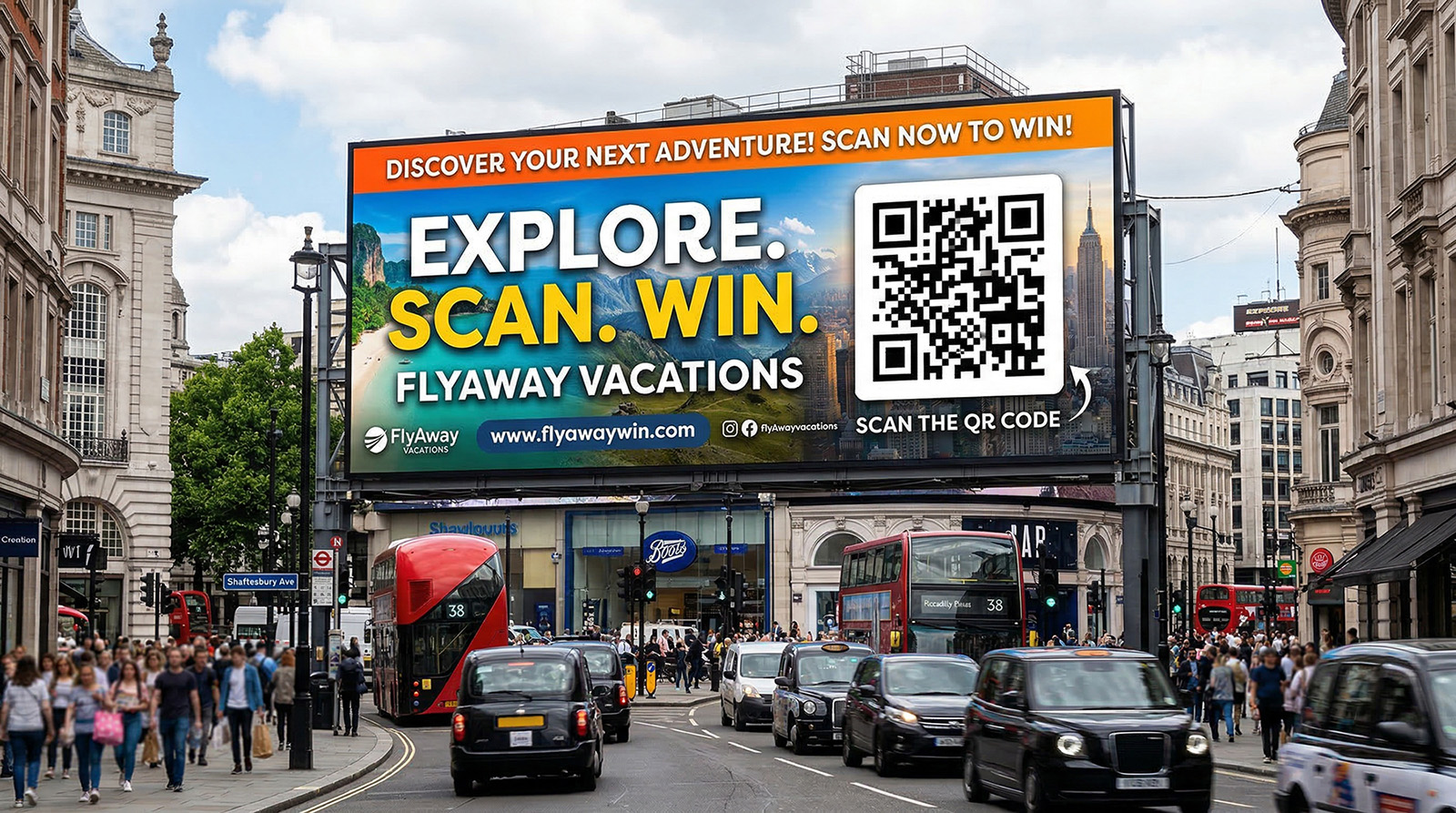
QR codes show up in advertising everywhere now — billboards, magazine pages, postcards, storefront windows, yard signs. But most of the time, the advertiser has no idea if anyone actually scanned it.
That's because most QR codes used in advertising are static. They're generated for free, printed once, and forgotten. No tracking. No way to update the link. No data at all.
If you're spending real money on advertising — print runs, billboard leases, direct mail postage — the QR code on that ad should be working just as hard as the rest of the campaign. That means it needs to be editable, trackable, and managed from a dashboard.
Here are five advertising placements where QR codes make sense, what typically goes wrong with each one, and how to set them up so you actually get useful data back.
1. Billboards and Outdoor Ads
Billboards are one of the most expensive advertising placements you can buy. A single month on a highway billboard can cost thousands of dollars, and the entire value of that spend depends on whether people take action after they see it.
A QR code on a billboard gives pedestrians and passengers a way to engage immediately — scan from the sidewalk, a bus stop, or while sitting in traffic. It bridges the gap between seeing the ad and visiting the website.
But here's what goes wrong: billboard contracts run for weeks or months. During that time, landing pages change, promotions end, and URLs get reorganized. A static QR code printed on a billboard vinyl is frozen in time. If the destination changes, the billboard is now sending people to a dead page — and you're still paying for it.
With a dynamic QR code, you can update the destination without touching the billboard. The promotion ended? Point it to the next one. Landing page moved? Fix it in ten seconds from your dashboard. And every scan gets logged — so you know exactly how much foot traffic that billboard actually drove.
2. Magazine and Newspaper Ads
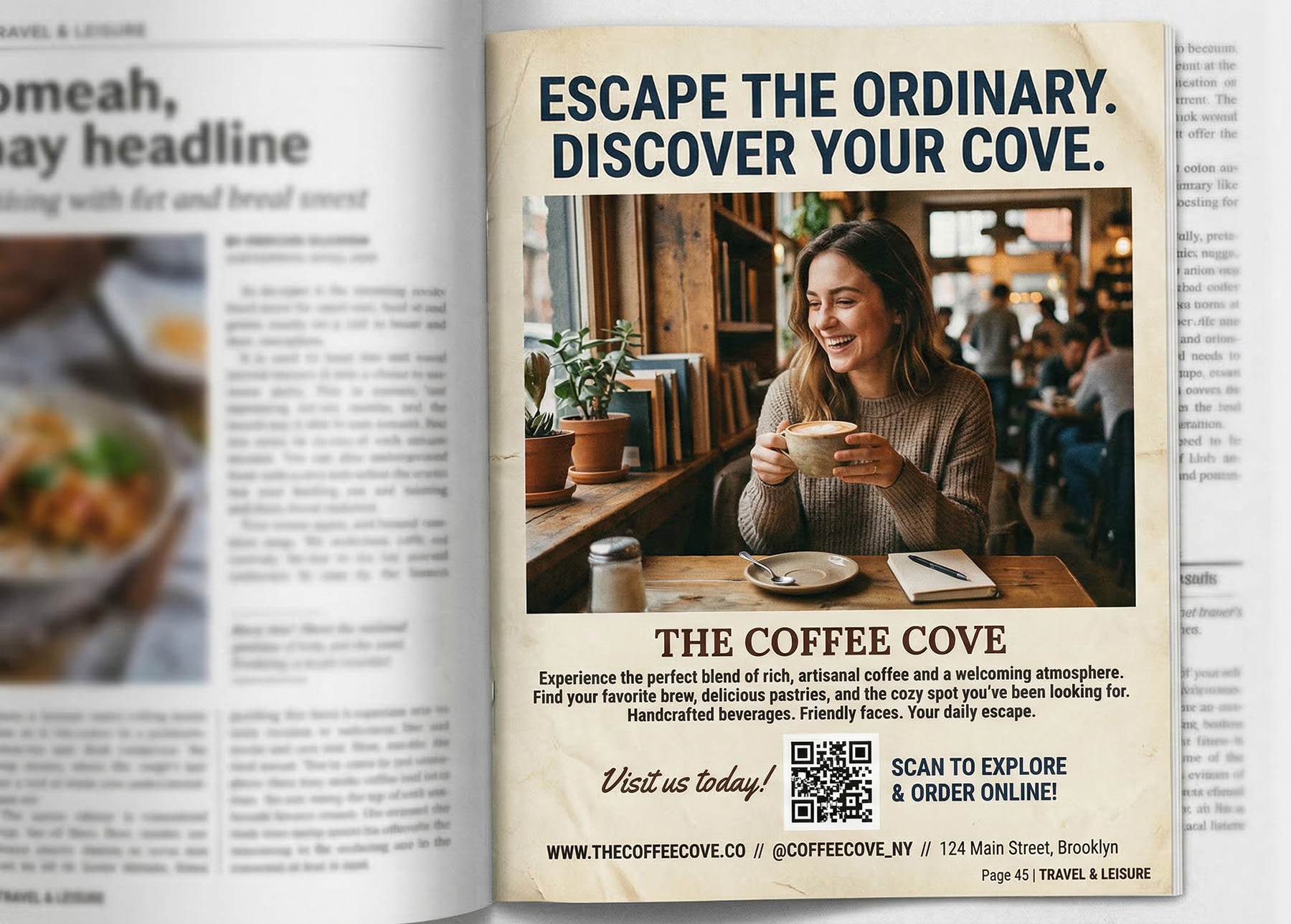
Print ads in magazines and newspapers have a long shelf life. Magazines sit in waiting rooms for months. Newspapers get passed around offices. That ad you placed in the March issue is still getting seen in June.
A QR code in a print ad lets readers jump straight to your website, menu, booking page, or special offer without typing a URL. It's the fastest path from print to digital.
The problem is that print ads are finalized weeks before publication. By the time the issue hits newsstands, the offer might have changed, the URL might have moved, or the campaign might be over entirely. A static QR code can't adapt to any of that.
A dynamic QR code solves this cleanly. The printed code stays the same, but you control where it goes. You can rotate the destination as offers change — spring sale becomes summer sale — and the same magazine ad keeps working. Meanwhile, scan tracking tells you which publications are actually driving engagement, so you can make smarter media buying decisions next quarter.
3. Direct Mail
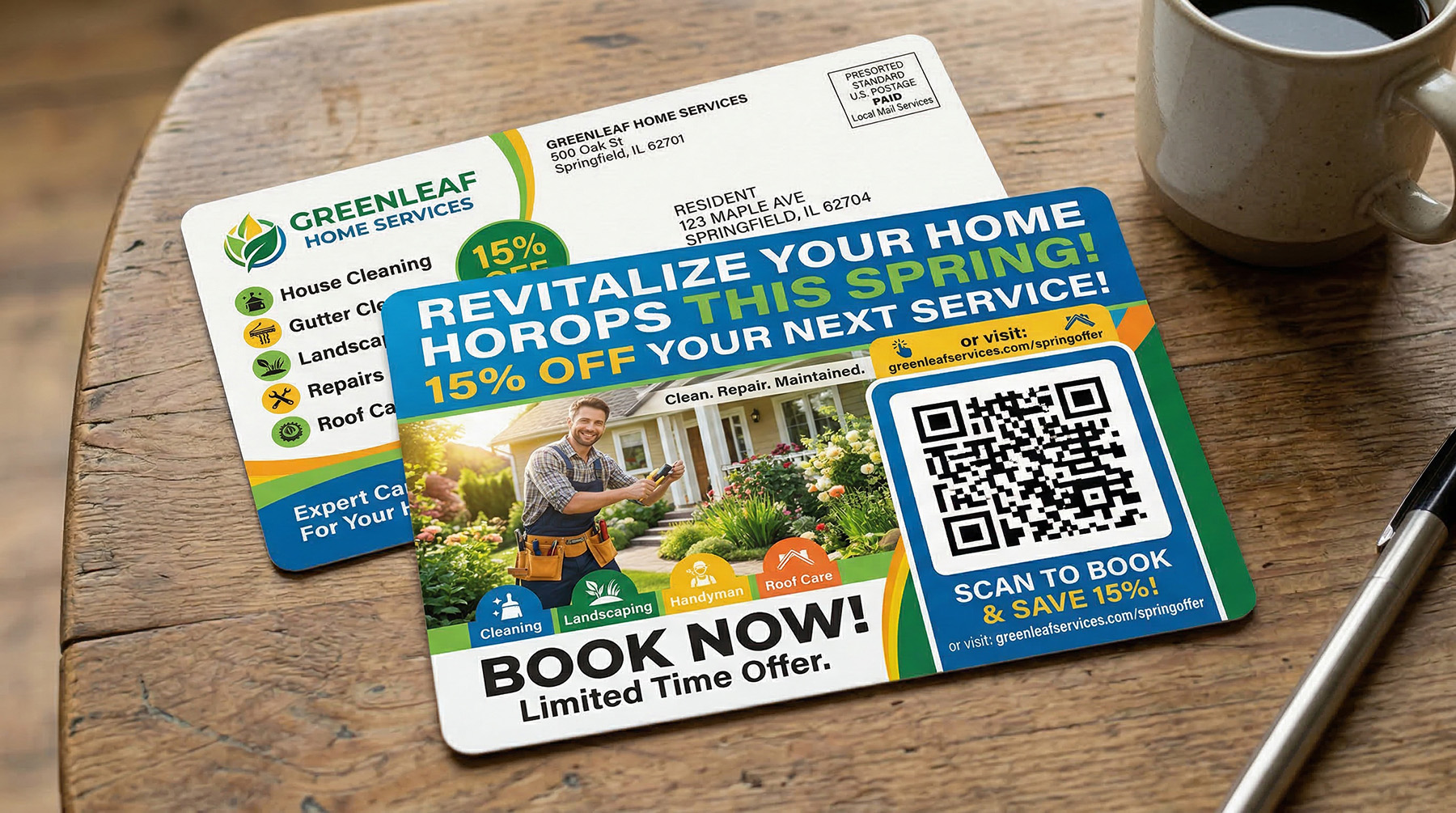
Direct mail is one of the hardest advertising channels to measure. You send 5,000 postcards and then wait to see if phone calls or website traffic go up. Maybe they do. Maybe they don't. You're guessing either way.
A QR code on a direct mail piece changes that completely. Every scan is a measurable response — timestamped, geolocated, and tied to a specific device. Instead of guessing whether the mailer worked, you have actual data: 312 people scanned it, mostly from the 75034 zip code, mostly on iPhones, mostly between 5pm and 8pm.
That's the kind of data that tells you whether to send the next batch or kill the campaign.
And because direct mail often promotes time-sensitive offers, the ability to edit the destination matters here too. The 15% off spring special is over? Update the QR code to point to your summer offer. The postcard is still sitting on someone's kitchen counter, and the code still works — it just goes somewhere current.
4. Storefront and Window Displays
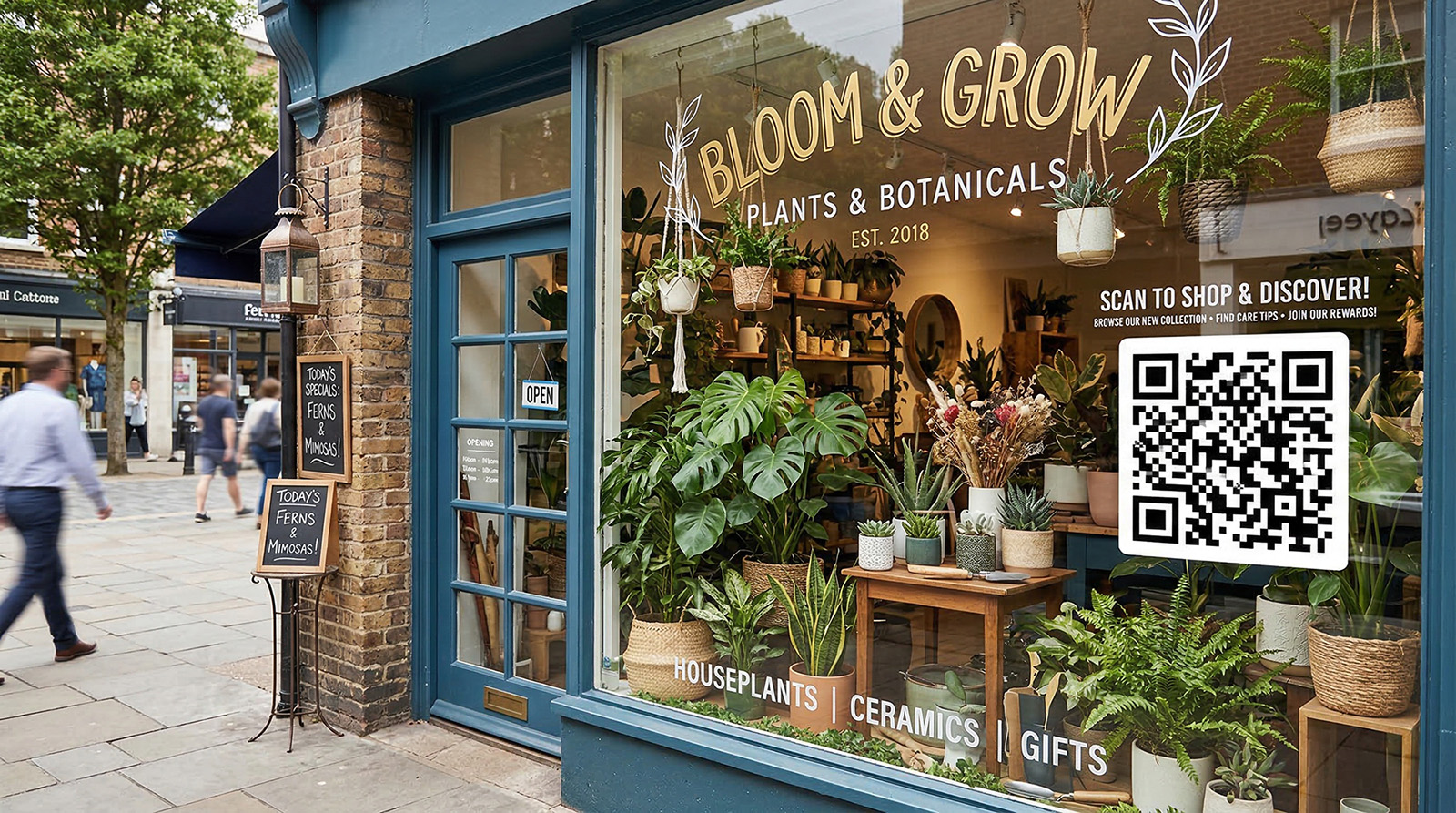
A QR code on a storefront window works 24 hours a day, even when the store is closed. Someone walks by at 9pm, sees the window display, scans the code, and lands on your online shop, your menu, your booking page, or your rewards signup. That's a conversion opportunity you'd otherwise miss entirely.
The challenge with storefront QR codes is that what's behind the link changes constantly. Retail promotions rotate. Restaurant menus update. Seasonal collections come and go. If the QR code on your window is static, you're replacing the decal every time something changes.
With a dynamic code, you print the window decal once and update the destination from your dashboard whenever you want. Holiday sale becomes New Year clearance becomes Valentine's Day promo — same QR code, different destination each time. And you can see exactly how many people scanned from the sidewalk, which tells you whether that window placement is worth the real estate.
5. Yard Signs and Outdoor Signage
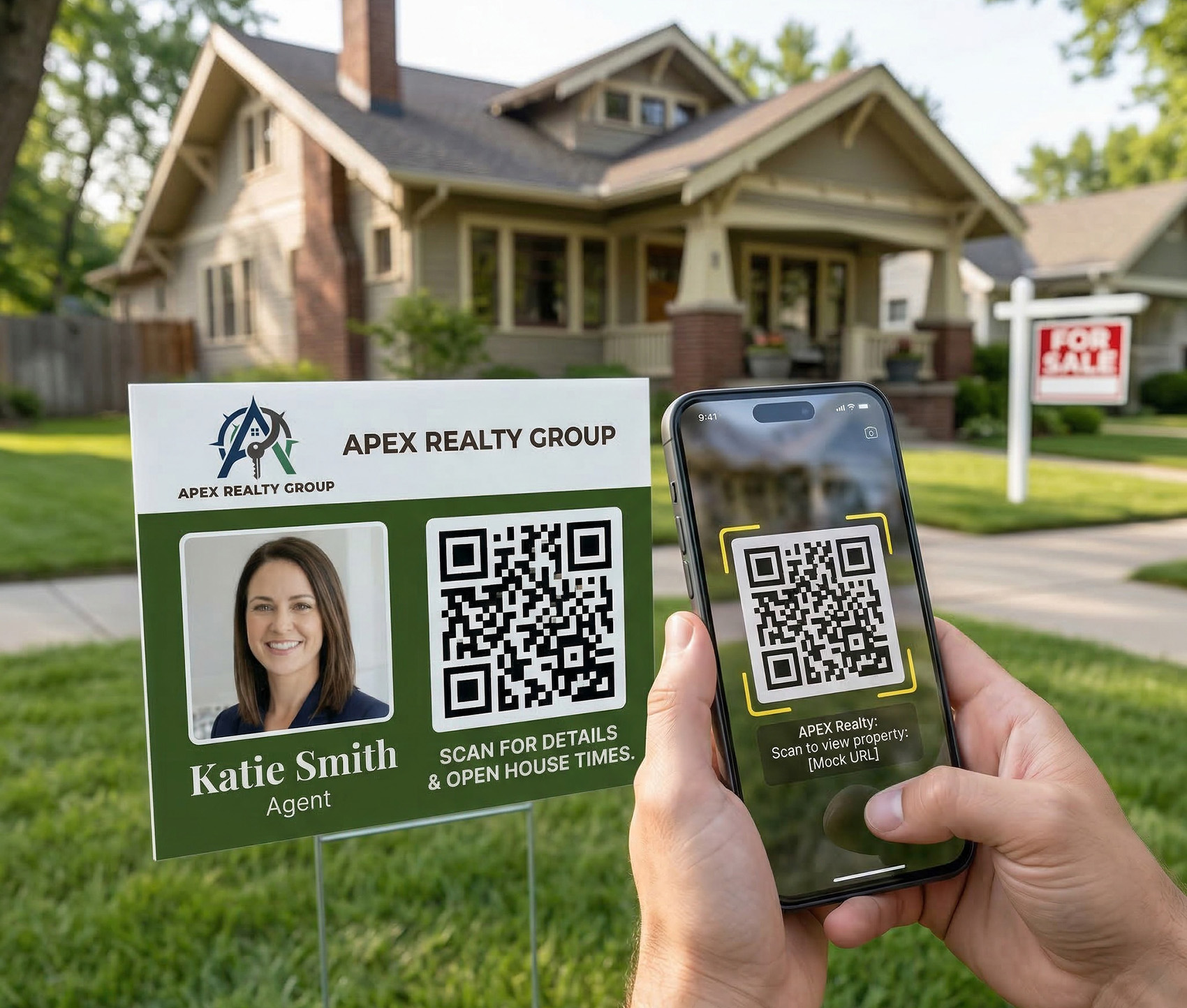
Yard signs are a staple for real estate agents, home service companies, political campaigns, and local event promotion. They're cheap to produce, easy to place, and they catch the attention of people who are physically near the thing being advertised.
A QR code on a yard sign lets someone instantly pull up the listing details, the contractor's website, the event schedule, or the candidate's platform — right from the curb. No need to remember a URL or search for it later.
The issue is that yard signs tend to stay in the ground longer than the content behind them. The house sells, but the sign is still there for a week. The event is over, but the signs haven't been collected yet. A static QR code on an outdated sign sends people to a dead end.
A dynamic QR code lets you redirect the sign to something useful — the agent's general listings page, the company's homepage, the next event. The sign keeps working even after its original purpose has passed. And scan tracking tells you which sign locations get the most engagement, so you know where to place them next time.
The Common Thread: Every Placement Needs Tracking
Across all five of these placements, the pattern is the same. You're spending money on advertising. The QR code is the bridge between the physical ad and the digital action. And if that bridge doesn't give you any data back, you're flying blind.
Static QR codes can't tell you anything. They can't be updated. They can't be measured. They're disposable tools being used in non-disposable advertising.
Dynamic QR codes — the kind you get from a tool like QR Code Better — give you the three things every advertiser needs: the ability to edit the destination after printing, scan-by-scan analytics with location and device data, and a dashboard to manage everything in one place.
If your advertising budget is more than $0, your QR codes should be trackable. It's that simple.